


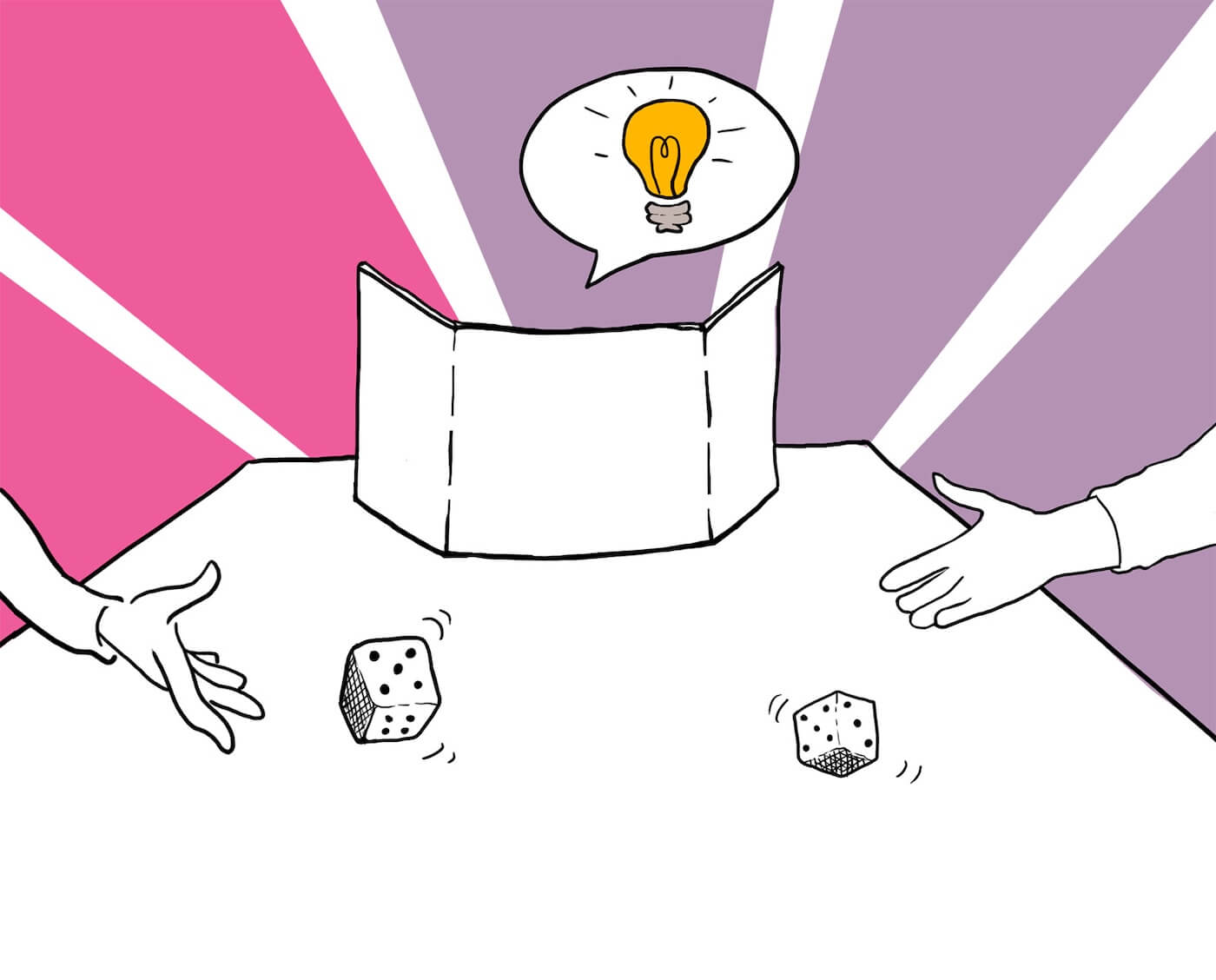
We embraced the challenge of using role-playing games to uncover what really matters to stakeholders when designing serious games.
Conversations about needs and values can be complex, especially when they involve vulnerable groups. We wanted a method that was engaging, empathetic, and effective. RPGs gave us exactly that. They can be conducive to the design process and help us identify what matters most while creating a safe and engaging environment. As such, they are an incredible tool for co-discovery, the first phase of our Integrative Design Approach.
The challenge
Our mission was to design a Serious game for young people in the Youth Justice and Care Systems. But before jumping into development, we needed to understand their experiences, aspirations, and the barriers they face. Interviews are often conducted to address this, but can fall short in these contexts – they can feel formal, intrusive, or simply fail to spark meaningful dialogue. So we asked ourselves: what if we could make these conversations playful?
Our approach
Instead of questionnaires, we built a custom RPG framework designed to facilitate open, creative conversations. The concept was simple yet powerful: invite young people to step into the shoes of a superhero-in-training at an academy – a metaphor for the support systems they navigate in real life. Through this playful lens, they could explore challenges, imagine solutions, and express their hopes without feeling exposed.
First, participants created their own superhero, selecting their skills and superpowers. Then, a facilitator – much like a narrator or a Game Master in role playing games, guided them through the adventure.
The game unfolded across two main spaces:
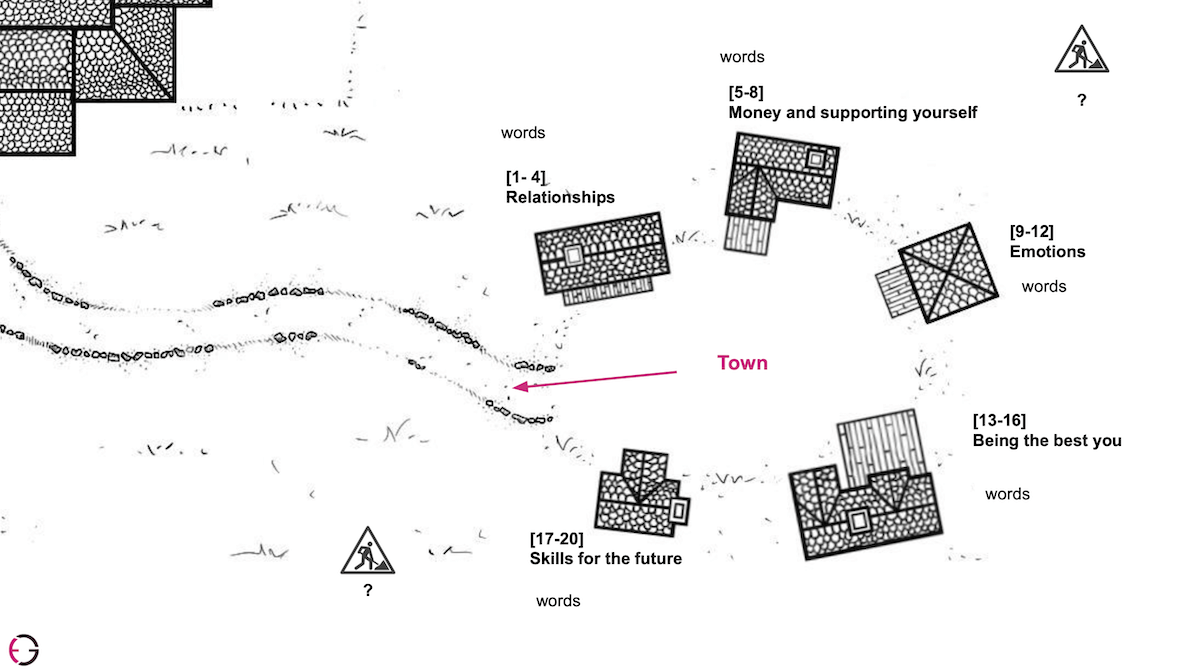
The Town, representing everyday life. Here participants rolled a dice to move across buildings in a map. Each location had a theme they could explore: relationships, emotions, money, self-improvement, and future skills. Keywords and visual cues were offered to prompt discussion.
The Academy, symbolising the care and/or justice system as well as their personal growth and support. Participants would enter the Academy after visiting the Town. Much like in the town, a map illustrated the environment. One building, the Academy, offers multiple rooms, each designed to help them dive deeper into selected topics, imagining skills they’d need to overcome obstacles and thrive. For example, the Recreation Room is about things that the young person is interested in, like hobbies and passions. The young person decides which order they enter the Superpower rooms and how many they wish to visit.

Why it worked
The RPG structure did more than keep conversations flowing – it created a safe, flexible environment. Metaphors like superheroes and superpowers allowed participants to abstract sensitive topics when needed, while interactive elements like dice rolls. If participants were not comfortable talking, they had the option to draw instead. For example, they could draw what they wanted to add to the Recreation room. This approach helped us move from guarded responses to rich insights, all while respecting boundaries.
You can review the full RPG framework on this page and download the PDF to use in your own case studies. If you’re interested in deploying this in your own work, get in touch with us to arrange a chat.


